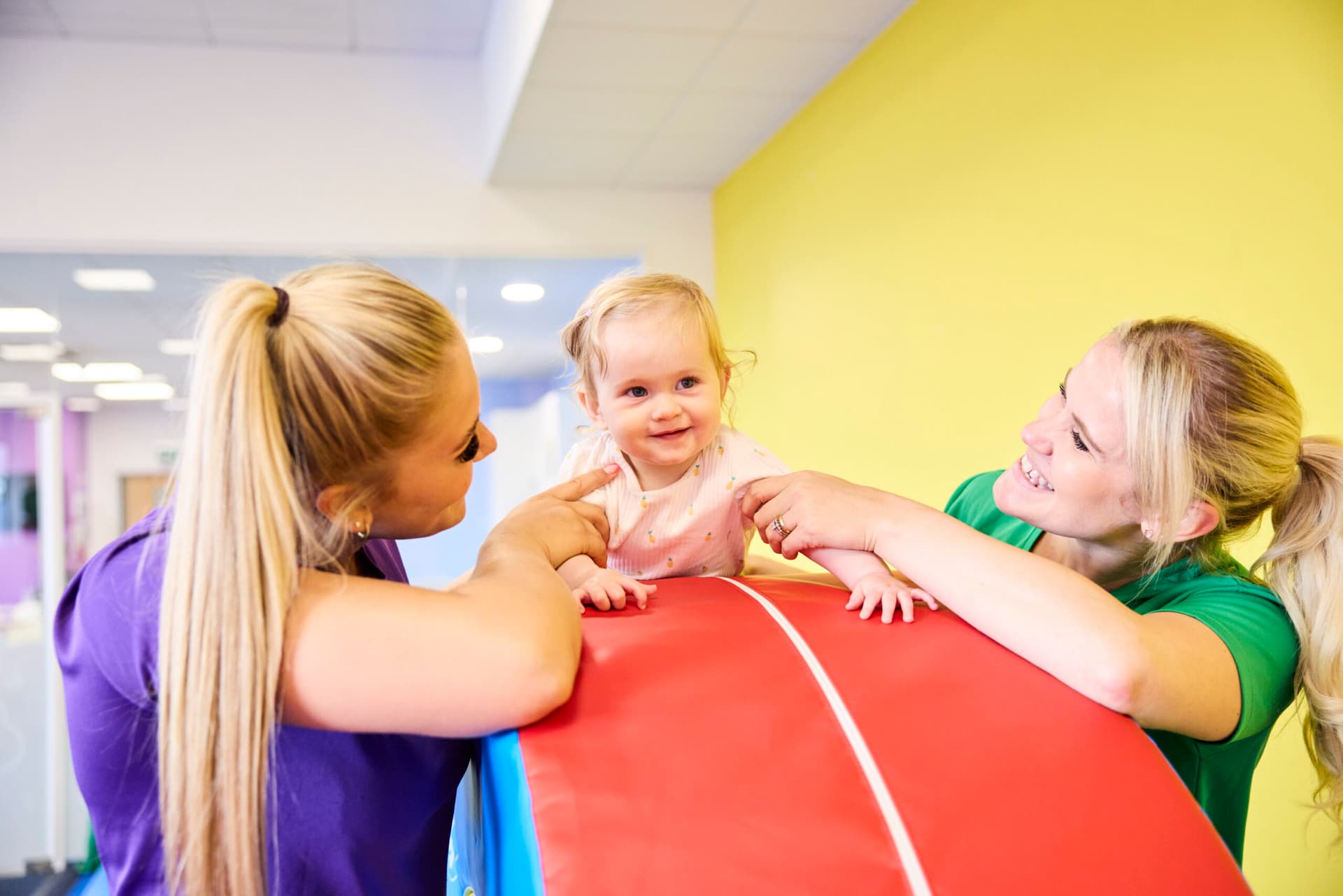
The first years of a child’s life are not just one stage among others—they form the foundation for all future development. Between ages 0 and 5, a child’s brain, body, and social skills develop at an extraordinary pace. Understanding what’s at stake during this period helps parents better support their child… without pressure, but with intention.
🧠 A brain under constant construction
At birth, a child’s brain is not “empty,” but it is far from finished.
Between ages 0 and 5, more than one million neural connections are formed every second. These connections develop through lived experiences: movement, play, interaction, repetition, and exploration.
Every time a child climbs, jumps, rolls, sings, listens, or imitates, they are literally building their brain. Rich and varied experiences strengthen useful connections, while those that are not used naturally fade away.
👉 Play is therefore not a distraction: it is the main driver of learning.
🤸♀️ Motor development: the foundation of all learning
Movement is one of a child’s first languages. Before speaking, children explore the world with their bodies.
Crawling, walking, running, balancing, and coordinating movements are much more than physical achievements—they support attention, self-confidence, and even academic learning later on.
A child who develops strong body awareness finds it easier to:
- concentrate,
- manage emotions,
- take on challenges,
- interact with others.
❤️ Emotional security and self-confidence
Between ages 0 and 5, children also build their view of the world—and of themselves.
Positive interactions, encouragement, the right to make mistakes, and the feeling of being supported all play a key role in developing self-confidence.
A child who feels emotionally secure dares to try, to fall, and to try again. This ability to persevere is essential throughout life.
🤝 Early social skills
Sharing, waiting one’s turn, listening, cooperating… These skills are not innate. They are learned very early, in appropriate environments where children can interact with others, guided by caring adults.
These first social experiences lay the groundwork for empathy, communication, and respect for others.
🌱 And after age 5?
Of course, nothing is ever “set in stone.” We learn throughout our lives.
But what is built between ages 0 and 5 makes future learning smoother, stronger, and more confident. That’s why investing time, attention, and quality experiences during this period is one of the greatest gifts you can give a child.
At The Little Gym, we believe every child deserves an environment where they can move, express themselves, try, and grow at their own pace.
Through movement, play, and positive encouragement, we support children during these foundational years, respecting their overall development: physical, cognitive, social, and emotional.
Because the early years matter… and every small step makes a big difference. 🌟
- Center on the Developing Child – Harvard University
- Organisation Mondiale de la Santé (OMS) – Guidelines on physical activity for children under 5
- UNICEF – Early Childhood Development
- Shonkoff, J. P. et al., The Science of Early Childhood Development